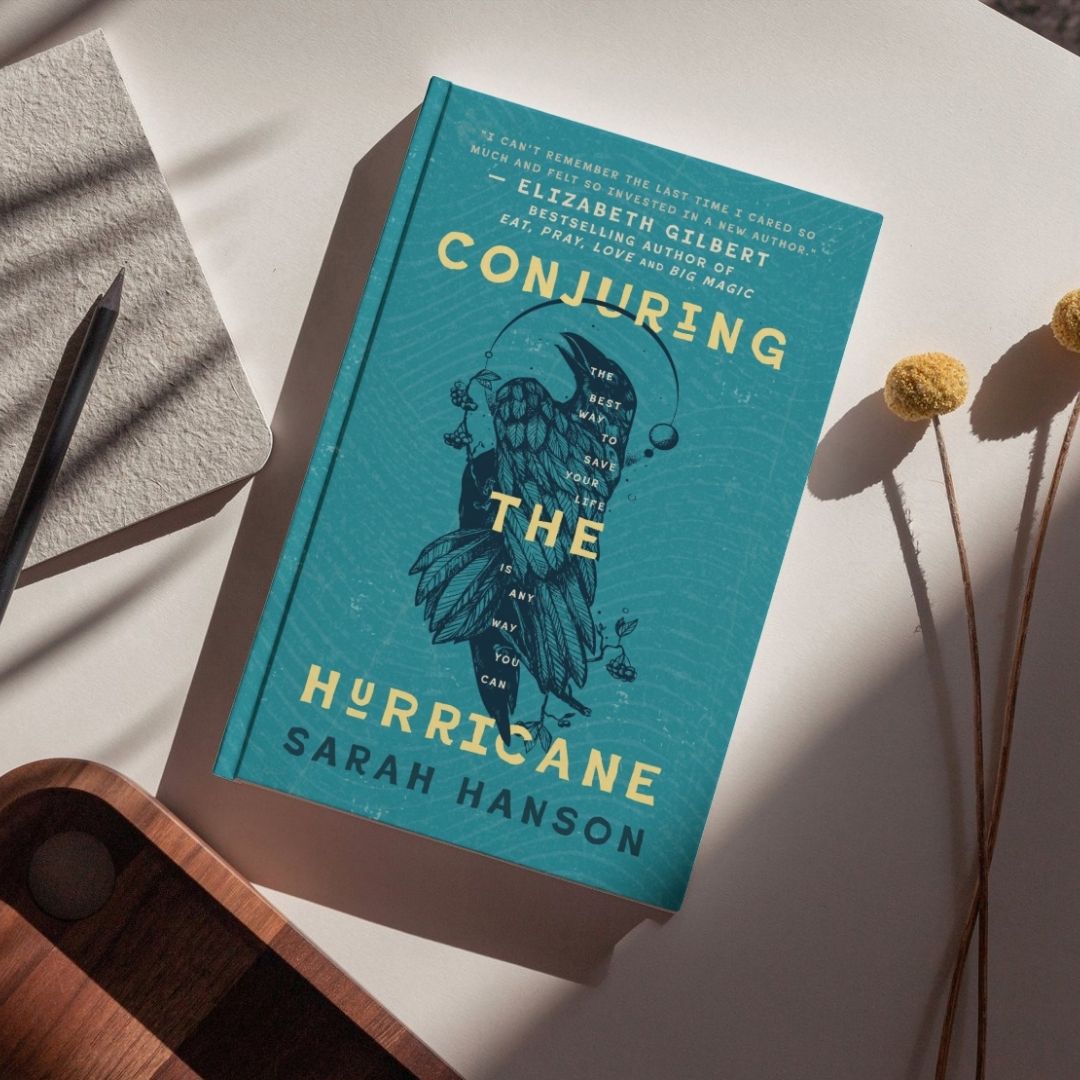
Conjuring the Hurricane shares her story of survival and recovery after domestic violence.
Poet and advocate Sarah Hanson tackles the complex emotions that churned up in the wake of deciding to leave her marriage. “There wasn’t a single cinematic moment where everything became clear,” the Maple Grove native says. “It was slower than that and more disorienting. I knew something was wrong long before I was willing to call it dangerous.”
Hanson’s Conjuring the Hurricane captures this sense of disorientation through lyric fragmentation, following a nonlinear timeline that mirrors how trauma resurfaces over time. “The realization came when I understood that I was organizing my life around managing someone else’s volatility instead of living my own [life],” Hanson says. “And that wasn’t sustainable. Not emotionally, not physically, not long-term.”
Hanson eventually found herself shifting the question from “How do I make this work?” to “What is this costing me to stay?” This was when she began the process of leaving and rediscovering herself. In light of Mental Health Awareness Month this May, we asked the author to share more about her memoir and the takeaways she hopes to impart upon readers.
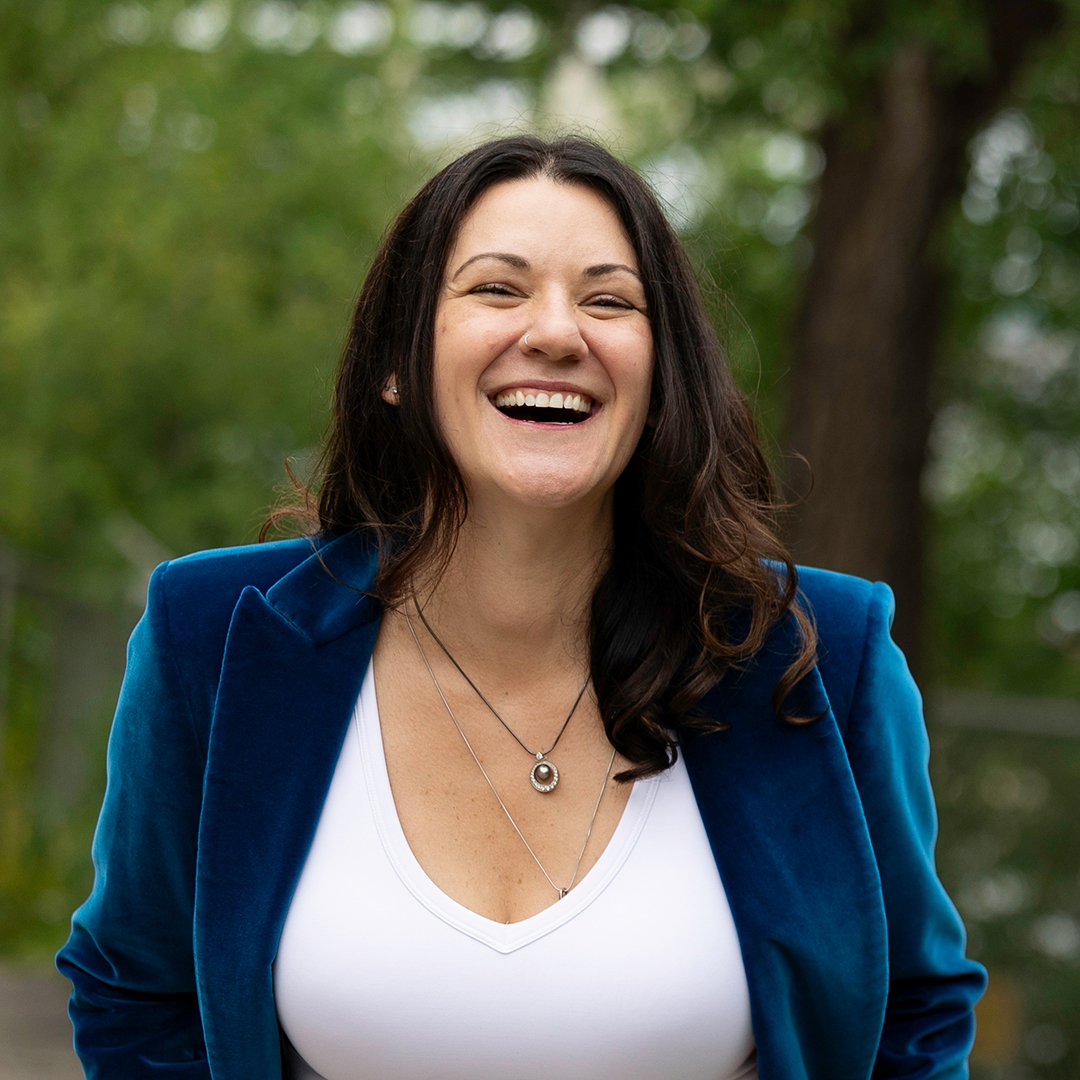
Sarah Hanson. Photos: Alison Lea Photography
When did you first begin working on what would become Conjuring the Hurricane?
I started writing the earliest pieces a few years ago before I fully understood what they were becoming. At the time, I wasn’t thinking, “I’m writing a book.” I was trying to make sense of my own experience in real time.
Poetry was the only form that could hold the amorphous quality of the memories I was working through. It let me tell the truth without having to explain it away or clean it up. It gave me a way to process something that didn’t fit into a neat narrative yet.
The book took shape several years later after I had enough distance and language to understand the impact of what I had been through. Once I had that perspective, I could start to see the arc—not just what happened but what it meant. And more importantly, what it cost to stay, and what it required to leave.
What did the writing process look like for you, and how did it differ from past writing projects?
This process was much less controlled and more experiential than anything I had done before. In the past, I approached writing more linearly and strategically. I knew what I was trying to say and how I wanted it to land.
With this book, the writing came in waves. Some pieces arrived fully formed, almost like they had been waiting. Others took time and distance before I could access them at all.
I also had to learn how to write while staying regulated. There’s a difference between revisiting a memory and re-living it, and I had to build the capacity to do the first without falling into the second. It became less about producing something polished and more about telling the truth in a way my body could tolerate.
The editing phase, which took about two years with my editor, was when I returned to that strategic focus: distilling language, refining structure and shaping the work into something readers could move through and hold.
This memoir revisits difficult times in your life. How did you approach unearthing those memories and experiences?
Carefully and not all at once.
I didn’t sit down and decide to excavate everything. I followed what felt accessible, and I let the work unfold over time. Some memories came back quickly. Others only surfaced when I was ready to hold them without being overwhelmed.
I also had support: friends, therapy and a lot of attention to my own limits. There’s a version of this process that can be re-traumatizing, and I was very intentional about not forcing myself into that.
The goal wasn’t to expose everything. It was to tell the truth in a way that was honest but also sustainable.
The cover of Conjuring the Hurricane includes the sentence: “The best way to save your life is any way you can.” Where did this come from?
That line came out of the tension I felt while leaving.
There’s a lot of messaging—especially for women—about how we’re supposed to leave: calmly, clearly, with a plan, with grace, with certainty. And that just wasn’t my reality.
Leaving was messy. It was nonlinear. It didn’t always look brave or clean from the outside.
That line is a permission slip. It’s an acknowledgment that when you’re trying to save your own life—emotionally, physically, psychologically—there isn’t one correct way to do it. There is only the way that gets you out.
Who is this book for, and what do you hope readers take away from it?
This book is for the person who knows something isn’t right but can’t quite justify leaving yet.
It’s for the person in that in-between space: where nothing looks “bad enough” from the outside, but inside, something feels off. Where the cost of staying is hard to name, and the cost of leaving feels overwhelming.
I hope readers feel recognized first. Before anything else, I want them to see themselves on the page and feel less alone in that experience.
And if they’re standing on the edge of a decision, I hope the book offers them permission—to trust themselves, to take their own knowing seriously and to believe that a different life is possible, even if they can’t see exactly what it looks like yet.
Conjuring the Hurricane is available through Inked Elephant Publishing.
Sarah Hanson
Instagram: @sarahhansonwrites