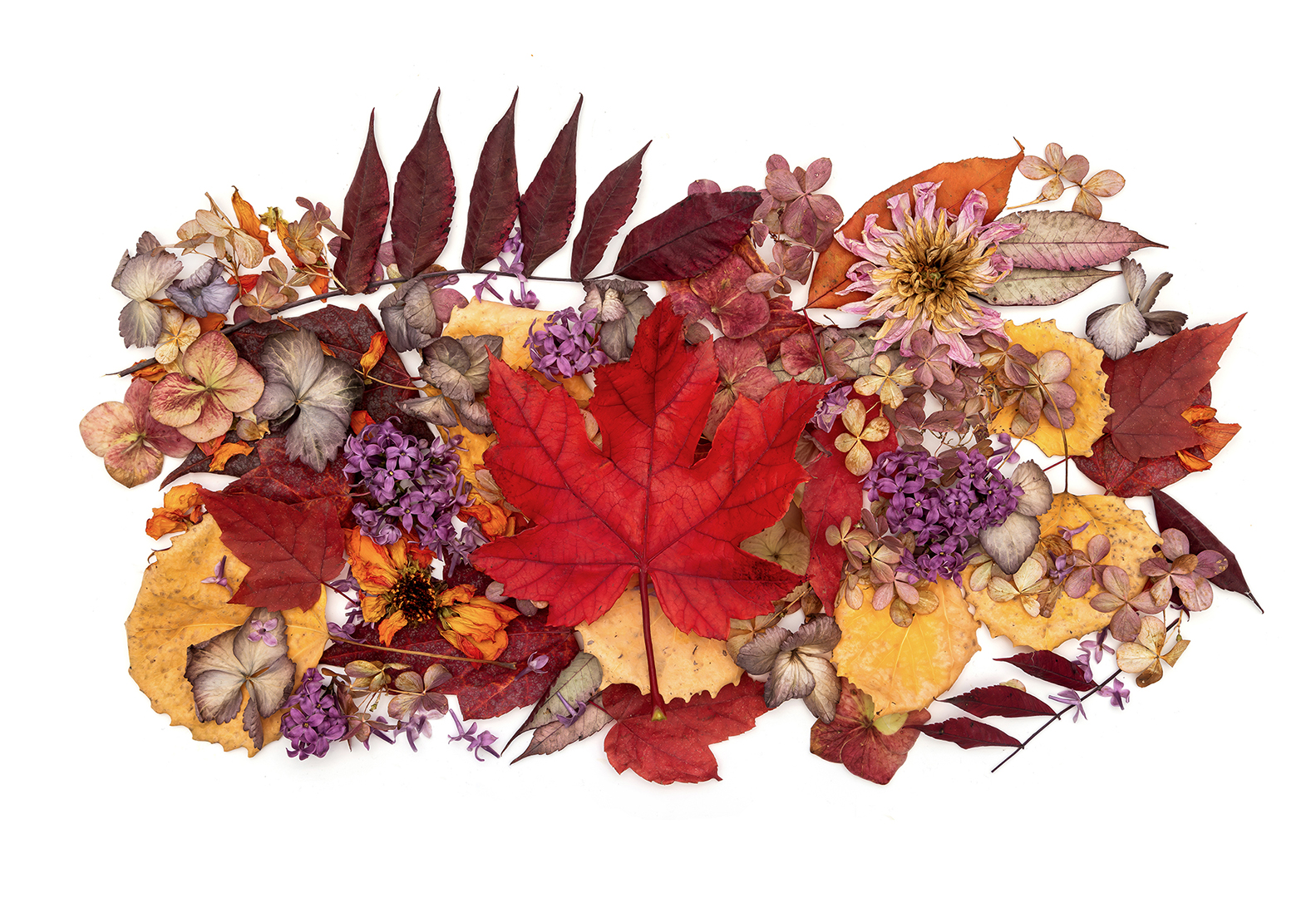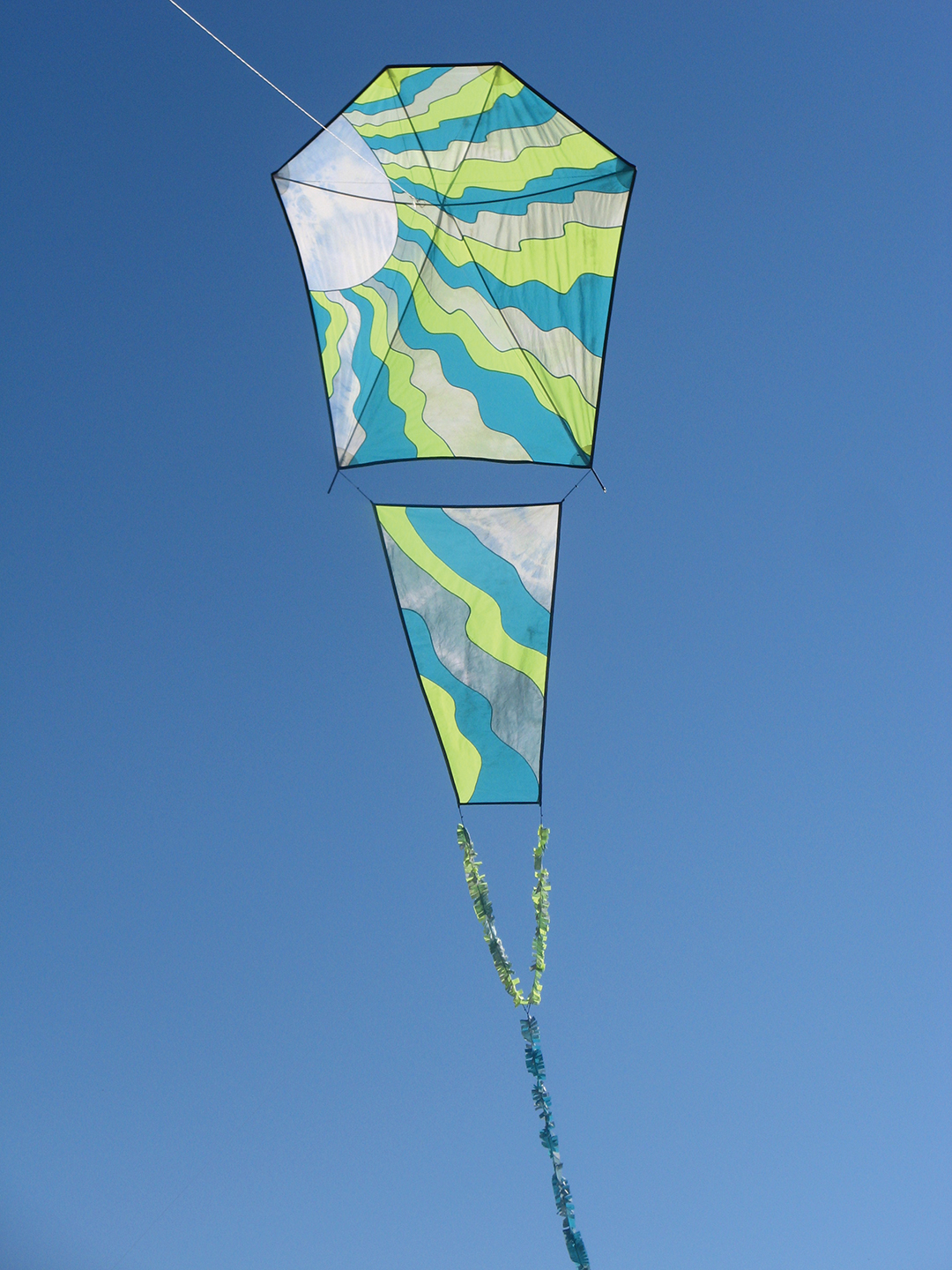
“It’s not just across the room that you’re looking at this stuff,” Barbara Meyer says. “You’re looking up 100 feet, 200 feet up in the air, and you still want it to pop.” Ripstop nylon doesn’t typically come in a wide variety of colors, so design is especially important when creating something like this barn door kite. Photo: Barbara Meyer
The process begins much the same as any other sewing project. Barbara Meyer has the shape and design in mind, and she translates her sketch into a pattern. But the fabric she lines up over her needle plate isn’t quilting cotton; it’s ripstop nylon. The pattern she’s making isn’t always tracepaper. If she’s using a soldering iron to hot cut, her pattern might be made out of something more durable, like sheet metal. “I also need to add pockets, and I need to add sticks, and I need to add bridle lines, and do I need a tail?” Barbara says. “All of that has to come into play before it truly is a kite.”
The Maple Grove resident has been flying kites since the late ’70s after her husband, Alex Meyer, first brought one home. And then, “When our children came along and I stayed home, I didn’t need tailored suits anymore,” Barbara says. The lifelong sewer rechanneled her creativity into kite making and soon found a resource in the American Kitefliers Association and its quarterly Kiting magazine. “It was like, ‘Oh, my goodness, there are other people out there doing this stuff,’” she says.
The blogs and forums of the early internet also gave rise to easily accessible resources and a community of kite hobbyists that span the globe. “My close friends don’t live here in Minnesota,” Barbara says. Her friends are in Australia, California, Illinois and Wisconsin. Often, Meyer finds herself en route to visit these friends at far-flung kite festivals or kite-making workshops, which are hotbeds of inspiration. “Other people bring a whole different aesthetic to the graphics that they put on their kites,” she says. “It’s very individual.”
Kiteflying also has a social aspect that transcends its fairly narrow niche. “If I make a quilt, I clean my house for people, and I invite people over to look at it,” Barbara says. “Whereas, if I make a kite, and it might be the very same pattern, I can go stand out in the soccer field, and people come over and talk to me. I have my own personal art display.”
Let’s Go Fly a Kite …
For those interested in getting airborne this summer, Barbara Meyer recommends finding a school playground with plenty of open space and picking a day with 5–10 mile-per-hour winds. Kiteflying is a two-man operation, Barbara says. The kitemaker breaks things down step by step:
- One person holds the kite; the other person holds the kite line. The person with the kite line should stand so that the wind blows on the back of their head and the face of the kite.
- The person with the kite walks about 20–30 feet away.
- When the person that has the string says, “Go,” the kite holder lets go and allows that kite to go up as the string person gives it a hard jerk and steps back about 5 feet.
- Voilà! “Your kite should go up and catch the wind,” Barbara says.
Barbara Meyer
Instagram: @makinkites